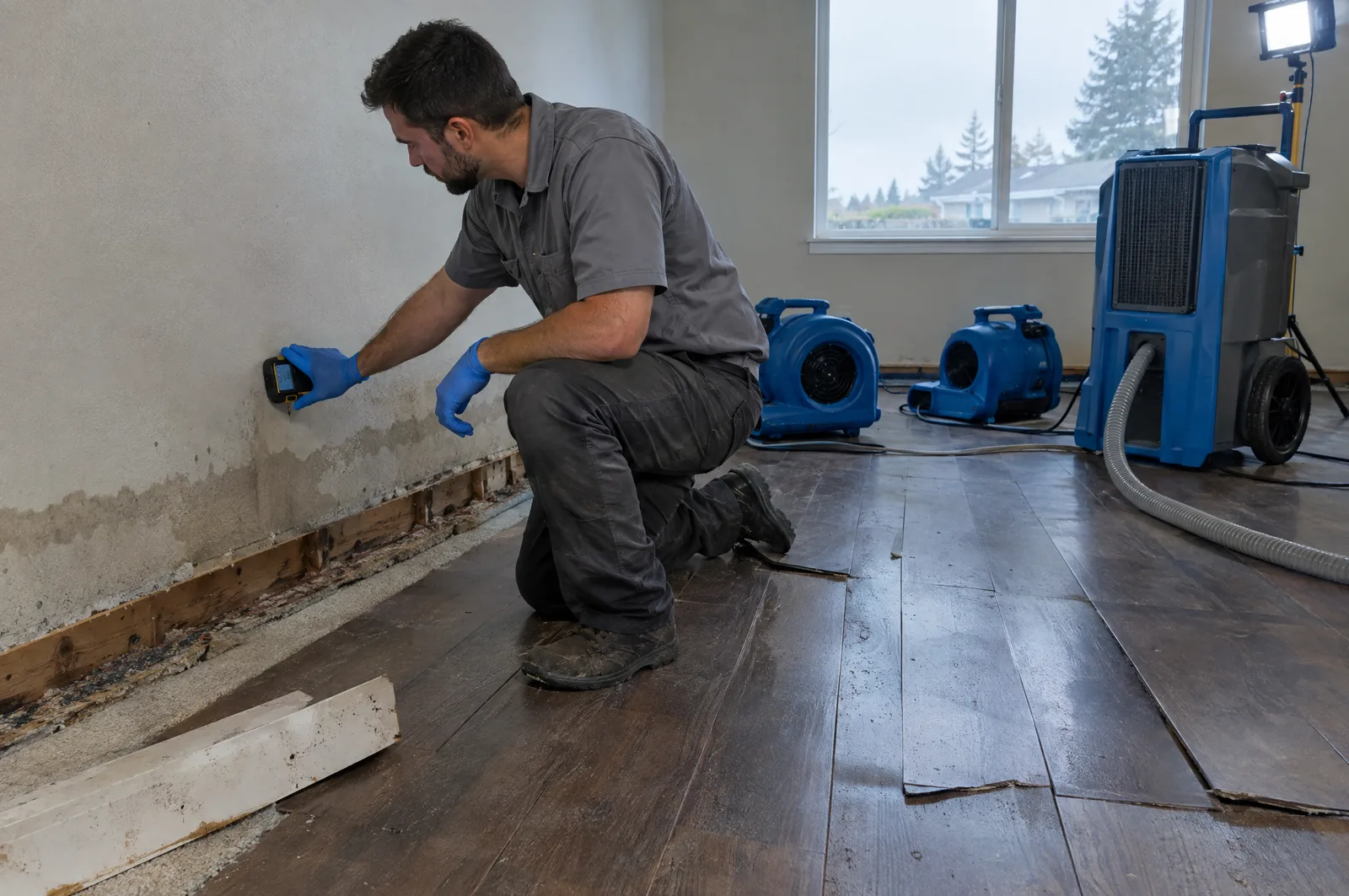
Restoration technician taking a moisture reading on water-stained drywall above a removed baseboard, with air movers and an LGR dehumidifier running behind him in a Tumwater, WA home
24/7 Emergency Water Response

Water Damage Restoration In Tumwater, WA

Supply line let go at 2am? Crawlspace holding water after a week of rain? We are rolling with extraction gear before it reaches your baseboards.

TRUSTED BY HOMES & BUSINESSES ACROSS THURSTON COUNTY

Overview

Water Damage Repair & Restoration For Tumwater Homes

Water damage is a clock, not an event. In the first hour it is water on the floor. By hour six it has wicked a foot up the drywall and soaked into the bottom plate. By day three you are not drying a house anymore, you are remediating mold in one.

Why Tumwater Losses Behave Differently

Two things about this area change how a water loss plays out, and both of them work against you.

The air will not help you dry. From roughly October through May, outdoor relative humidity in Thurston County sits high enough that ventilation is worthless or counterproductive. In a dry climate you can open the house up and let the loss dry itself. Here, opening the windows pulls in air that is already carrying more moisture than the air inside. Drying has to happen in a closed envelope with mechanical dehumidification, which takes more equipment and more days than the same loss would take in Arizona.

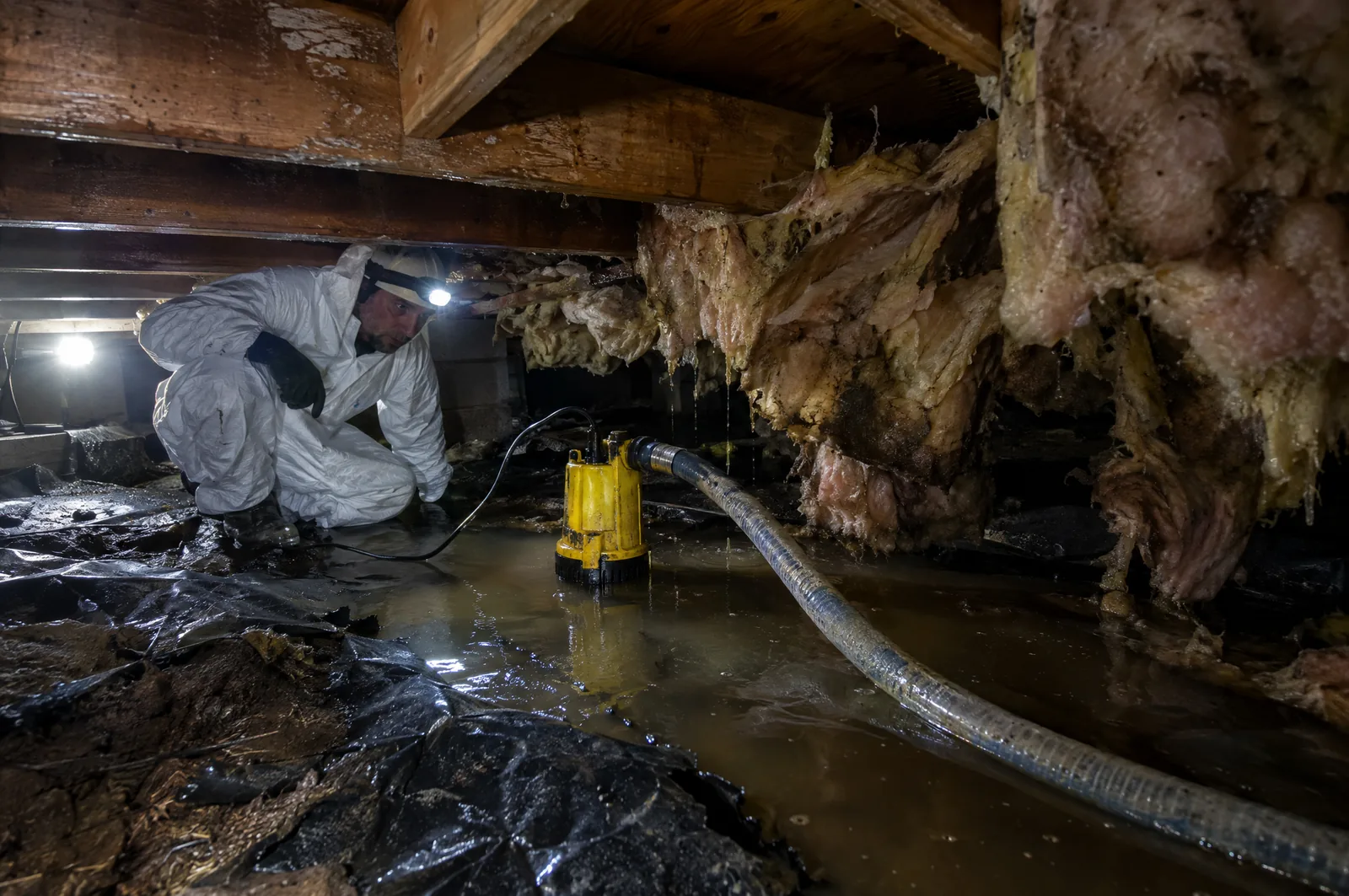
The water ends up under the house. Most homes in Tumwater sit on a vented crawlspace. Water from a burst supply line, a failed water heater, or an overflowing fixture finds the path down and pools on the vapor barrier, soaks the batt insulation in the joist bays, and sits there in the dark against the subfloor. Homeowners dry the visible room, feel fine about it, and call us back the following spring about a musty smell. We pull the crawlspace hatch on every single water loss.

What It Costs

Water losses price by the affected square footage, the category of water, how many materials have to come out, and how many days of equipment it takes to reach dry standard. A contained bathroom supply-line failure is a very different number than a second-story water heater that ran overnight into the ceiling below and then into the crawlspace.

We do not quote water damage over the phone, because anyone who does is guessing. We inspect, scope, and give you the number in writing before equipment goes down. On insured losses we document and coordinate the claim with your carrier directly and you pay your deductible.

Why The First Hour Matters

Extracted water is free. Evaporated water is expensive. Every gallon we pull out mechanically is a gallon that does not have to go through a dehumidifier, and dehumidifier hours are what drive the equipment count and the days on site. That is the entire argument for calling immediately instead of waiting until morning.

The other reason is category migration. Clean Category 1 water from a supply line degrades into Category 2 within roughly 48 hours as it picks up material from carpet, pad, and dust. Category 2 becomes Category 3 after prolonged sitting. Each step up means more material gets removed instead of dried, and the job gets more expensive and more invasive.

Get Help Now

Water still spreading? Call us. 24/7 dispatch, 60-minute response across Tumwater and Thurston County, IICRC-certified technicians, and we handle the insurance.

Scope of Work

What Our Water Damage Restoration Service Includes

60-Minute Response Across Tumwater

From Tumwater Hill and the Brewery District to Bush Prairie and Littlerock Road, most addresses see a technician inside an hour, any hour. Trucks run the Capitol Boulevard and I-5 corridor with extraction units, air movers, and dehumidifiers already loaded.

IICRC S500 Category And Class Assessment

Before equipment goes down we classify the water (Category 1 clean, 2 grey, 3 black) and the class of loss. That determines what gets dried, what gets removed, and what your carrier will actually pay for. Guessing here is how homeowners end up with mold and a denied supplement.

We Go Under The House Every Time

Most Thurston County homes are on a vented crawlspace, and gravity means that is where water ends up. We inspect the crawl on every water loss, because drying the room above standing water and saturated batt insulation is how a two-day job turns into a mold remediation next spring.

Closed-Envelope Drying Built For This Climate

You cannot ventilate-dry a structure in Western Washington for most of the year. The outdoor air you would pull in is already carrying more moisture than the air inside. We dry closed, with low-grain refrigerant dehumidifiers sized to the loss, which is the only method that works here between October and May.

Insurance Documented And Coordinated

We photograph everything, write the estimate in the format your carrier prices from, and talk to the adjuster directly. You pay your deductible, not the whole invoice, and we handle the supplements when hidden damage turns up behind a wall.

How It Works

Our Water Damage Restoration Process, Step By Step

  1. Step 1

    Emergency Call And Dispatch

    You call, a person answers. We ask three things: is the water still running, is anyone in danger, and can you safely shut off the main. If the source is still active we walk you through the shutoff on the phone while the truck rolls. We confirm your cross streets, because a Tumwater Hill address and one out past Littlerock route differently and we would rather give you a real ETA than a comfortable one. Do not start pulling up carpet or running household fans before we arrive, and do not open windows. Uncontrolled airflow spreads contamination on Category 2 and 3 losses, and in this climate open windows add moisture rather than removing it.

  2. Step 2

    Inspection, Moisture Mapping, And Scope

    The technician walks the loss with a moisture meter and a thermal camera, mapping how far the water actually traveled, which is almost always further than what is visible. We take readings on drywall, framing, subfloor, insulation, and cabinet toe-kicks, we pull the crawlspace hatch and check underneath, and we set a dry standard from an unaffected area of the same structure. We classify the water category and the class of loss, photograph everything, and walk you through the scope before any equipment goes down. This takes 30 to 60 minutes. Ask your questions here, because this conversation determines the entire job.

  3. Step 3

    Extraction And Controlled Removal

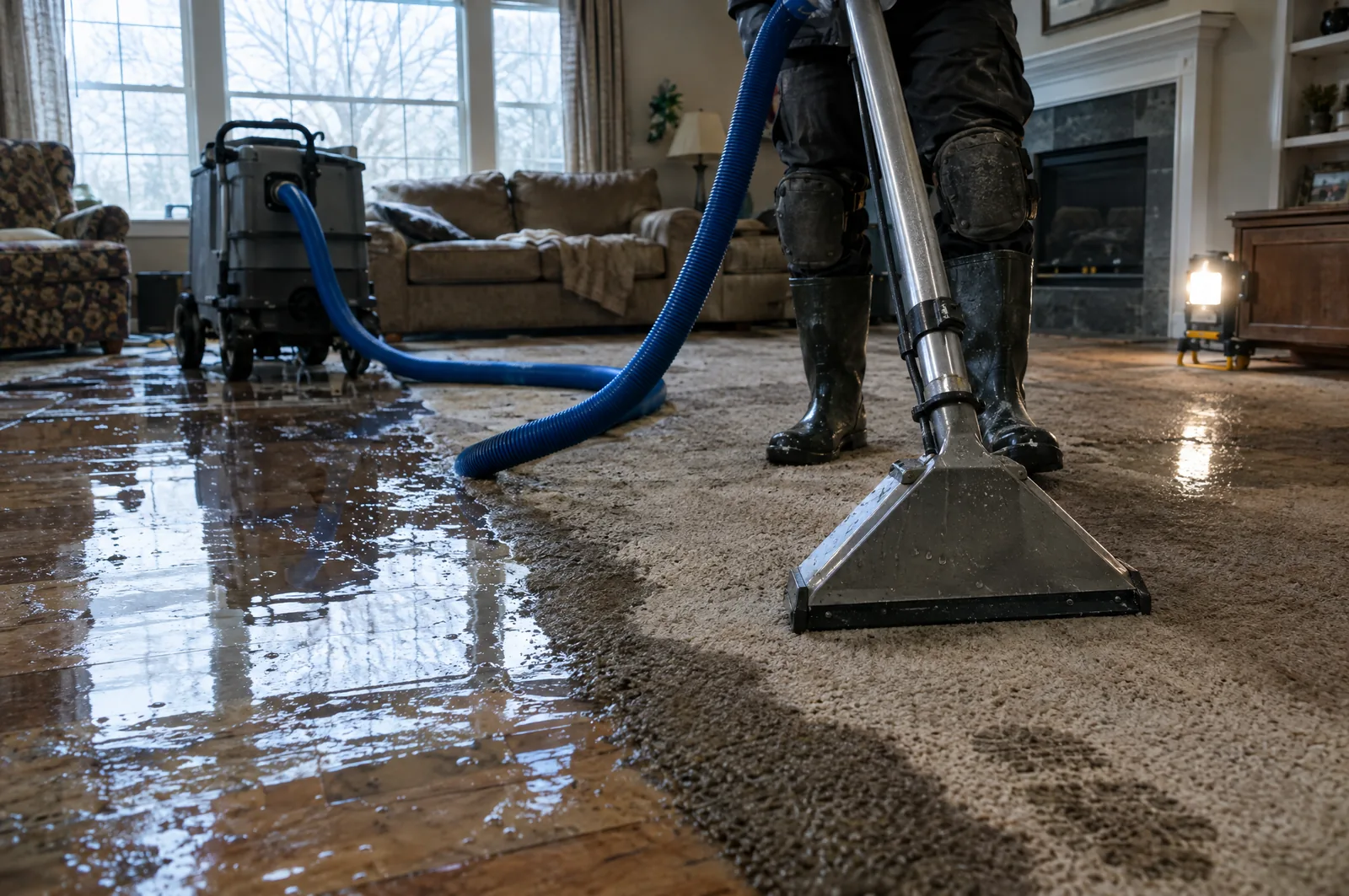
    Standing water comes out first with weighted and portable extraction, including water trapped in carpet pad, subfloor cavities, and the crawlspace below. Then we remove only what cannot be dried in place: saturated pad, swollen laminate, wet batt insulation, and drywall below a documented wick line. On Category 2 and 3 losses we set containment and negative air before anything is opened. Everything removed is photographed and logged before it goes in the dumpster, because your adjuster pays against documentation. Typically 2 to 6 hours depending on square footage.

  4. Step 4

    Structural Drying And Daily Monitoring

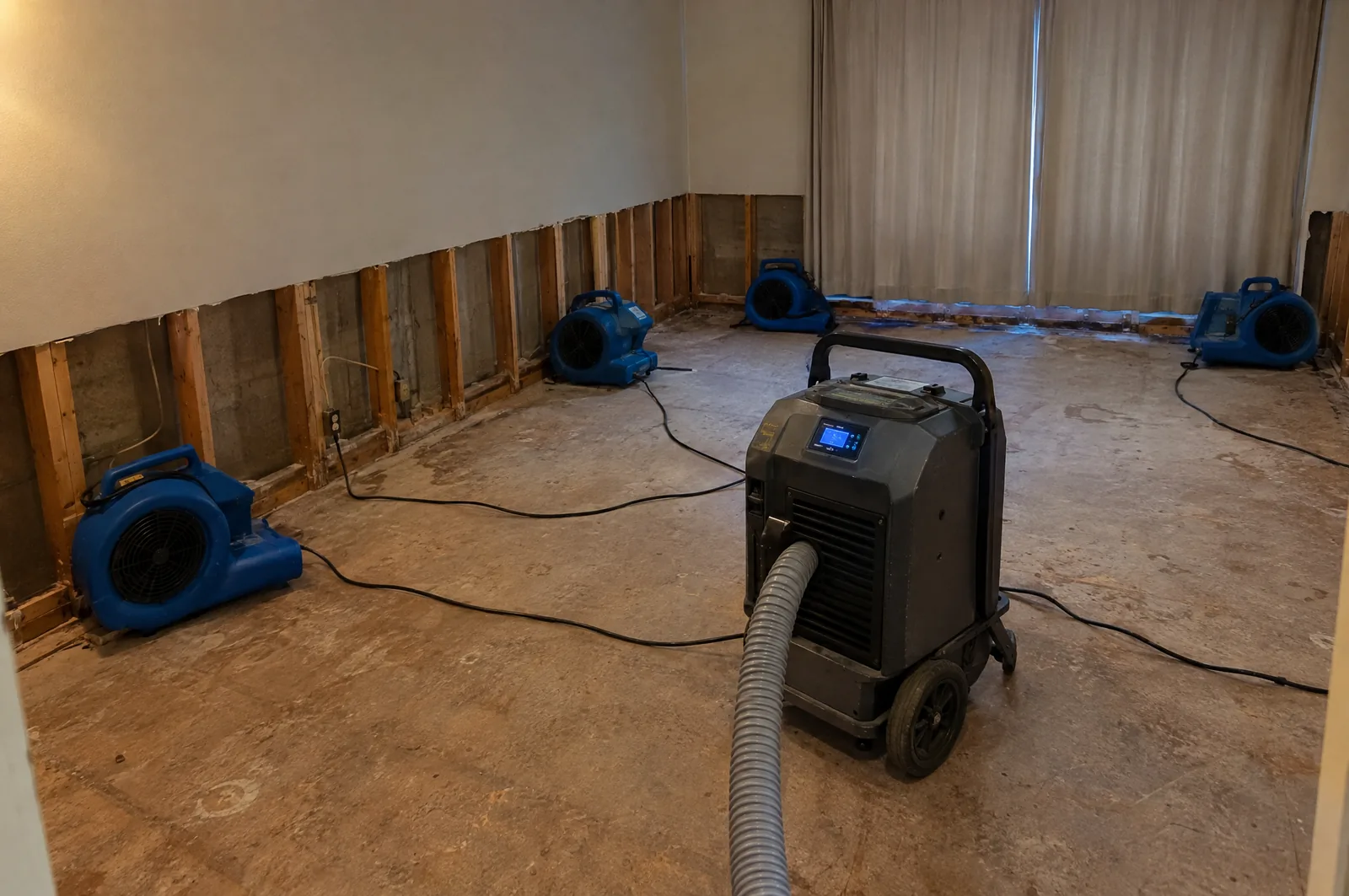
    Air movers and low-grain refrigerant dehumidifiers get placed by calculation, based on cubic footage, class of loss, and the materials involved, not by whatever happened to fit in the truck. Equipment runs continuously and the house stays closed. A technician returns daily to take readings on every affected material, adjust placement, and log the numbers. Most residential losses here reach dry standard in three to five days, and longer in midwinter when ambient humidity is working against us the whole time.

  5. Step 5

    Clearance, Documentation, And Handoff

    When every material reads at or below dry standard on consecutive days, we pull equipment and do a final walkthrough with you. You receive the complete file: daily moisture logs, psychrometric readings, equipment records, before and after photos, a written statement of what was removed and why, and the estimate that went to your carrier. That file is what your repair contractor builds from, and it means nobody is guessing about what is behind the wall they are closing up.

24/7 Emergency Response

Ready For Water Damage Restoration?

Call now for 24/7 emergency response across Thurston County. IICRC-certified technicians, insurance handled.

FAQs

Water Damage Restoration Questions From Tumwater Homeowners

  • Most Tumwater addresses see a technician inside 60 minutes, 24 hours a day, 365 days a year including holidays. Addresses along the Capitol Boulevard and I-5 corridor are usually faster than that. Outlying Thurston County addresses toward Rochester, Tenino, or Grand Mound can run longer. When you call we give you a real ETA based on where the closest truck actually is, not a scripted number.

  • Sudden and accidental water damage, a burst supply line, a failed water heater, a frozen pipe that split, an overflowing tub, is covered by most standard policies. Long-term seepage that has been going on for months and surface flooding from outside water usually are not. We document the loss thoroughly so the cause is clear, and we coordinate directly with your adjuster. You pay your deductible.

  • Open windows are the single most common mistake we see in Thurston County. For most of the year the outdoor air here is near saturation, so opening up the house pulls in more moisture than it removes and actively slows the drying. Household fans move air but do nothing about humidity, so water leaves the carpet and lands in the drywall. Without dehumidification and moisture readings you have no way to know whether the framing behind the wall is dry, and that gap is where mold starts.

  • Three to five days for most residential losses, longer in December through February when ambient conditions fight us the entire time. Hardwood, plaster, and multi-layer flooring assemblies take longer still. Equipment comes out when the moisture readings hit dry standard, not when the calendar says three days, and we show you the numbers each day so you are never guessing.

  • The drying is the same, but the damage pattern is not. Freeze breaks usually happen in the least protected runs, which around here means the crawlspace, an unheated garage wall, or an exterior hose bib. That puts the water underneath the house or inside a wall cavity rather than out in the open, so it is often running for hours before anyone notices. We map the full path before placing equipment rather than drying the one room with a visible stain.

  • Usually no. Most water losses are contained to part of the home and you can stay, though the drying equipment is loud and the affected rooms are off limits while it runs. Category 3 sewage losses, or losses affecting the only kitchen or bathroom, may require temporary relocation, which many policies cover under additional living expense.

24/7 Emergency Restoration

Don't Wait. Call Now.

Open 24/7 - Emergency Dispatch

Tap To Call (877) 524-6411