Most people think the damage stops when the fire is out. It does not. A fire job is two jobs running at the same time, and both clocks start the moment the fire department leaves.
The Two Clocks
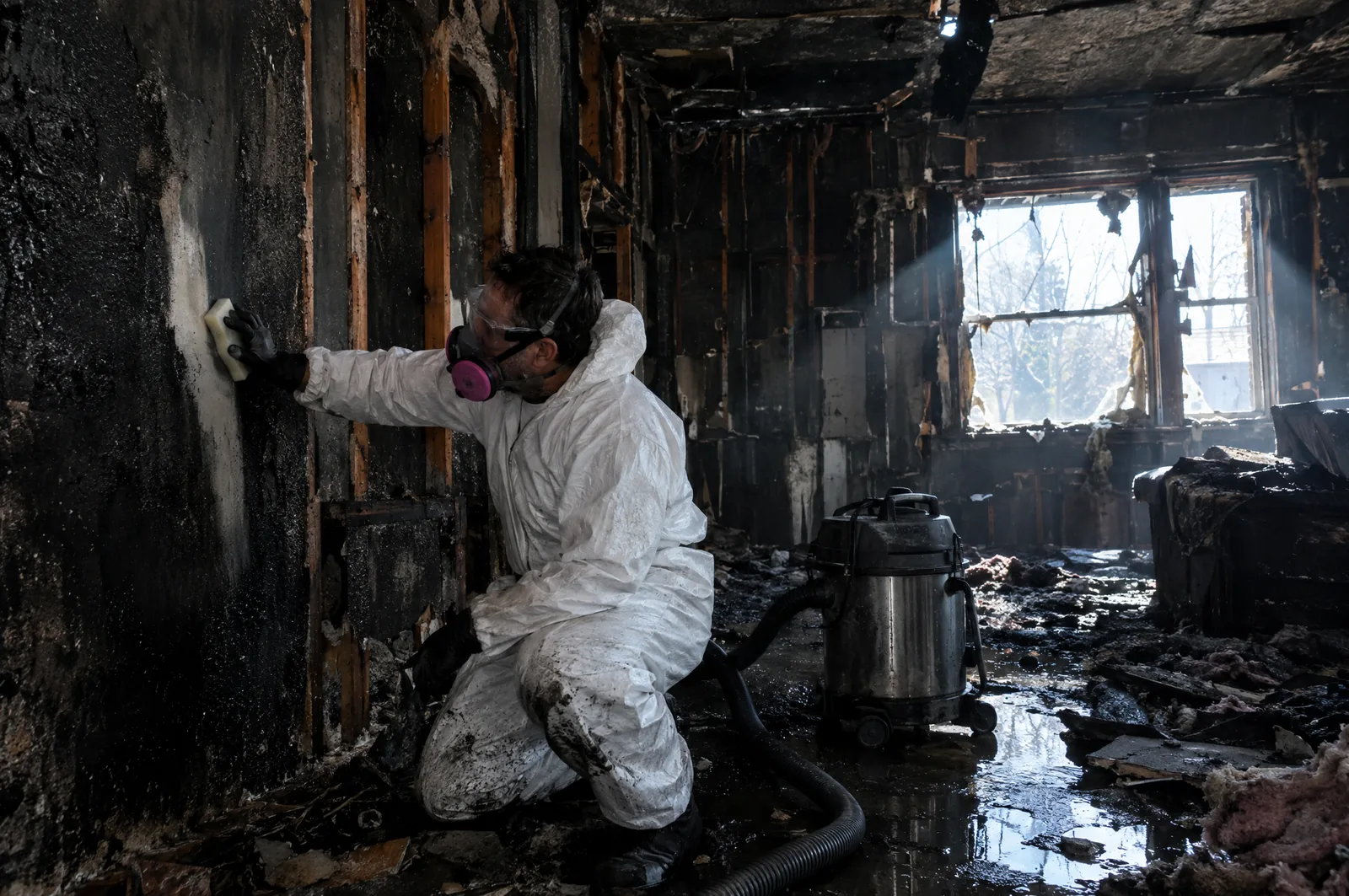
Soot keeps working. Smoke residue is acidic and hygroscopic. It continues etching metal, glass, grout, and finished surfaces for as long as it stays on them, and it pulls moisture out of the air, which in Thurston County means it is never short of moisture to pull. Fixtures, appliances, wiring, and electronics that are cleanable on day one are frequently replacements by the end of the week. That difference is a large share of what a fire claim ends up costing.
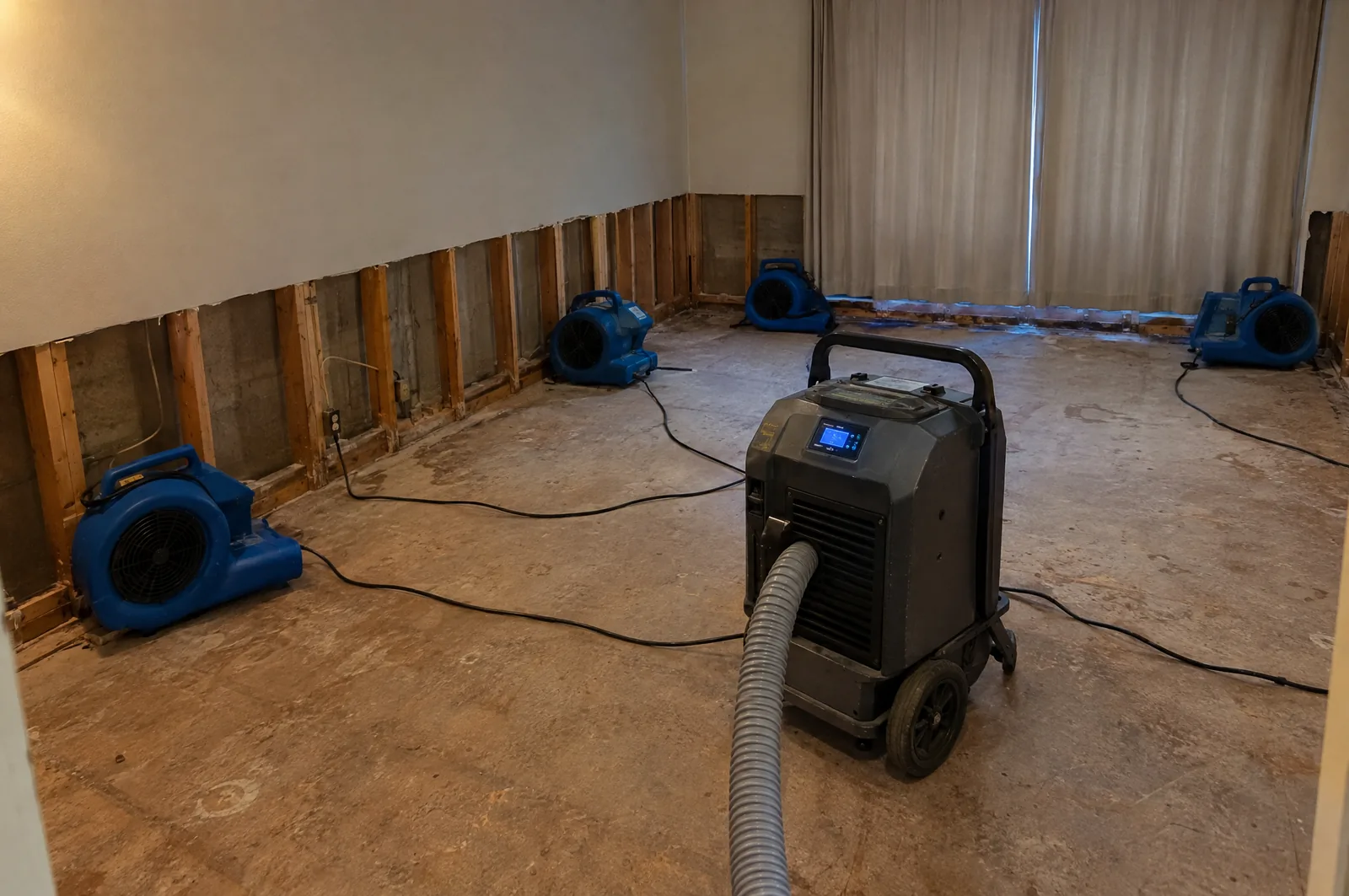
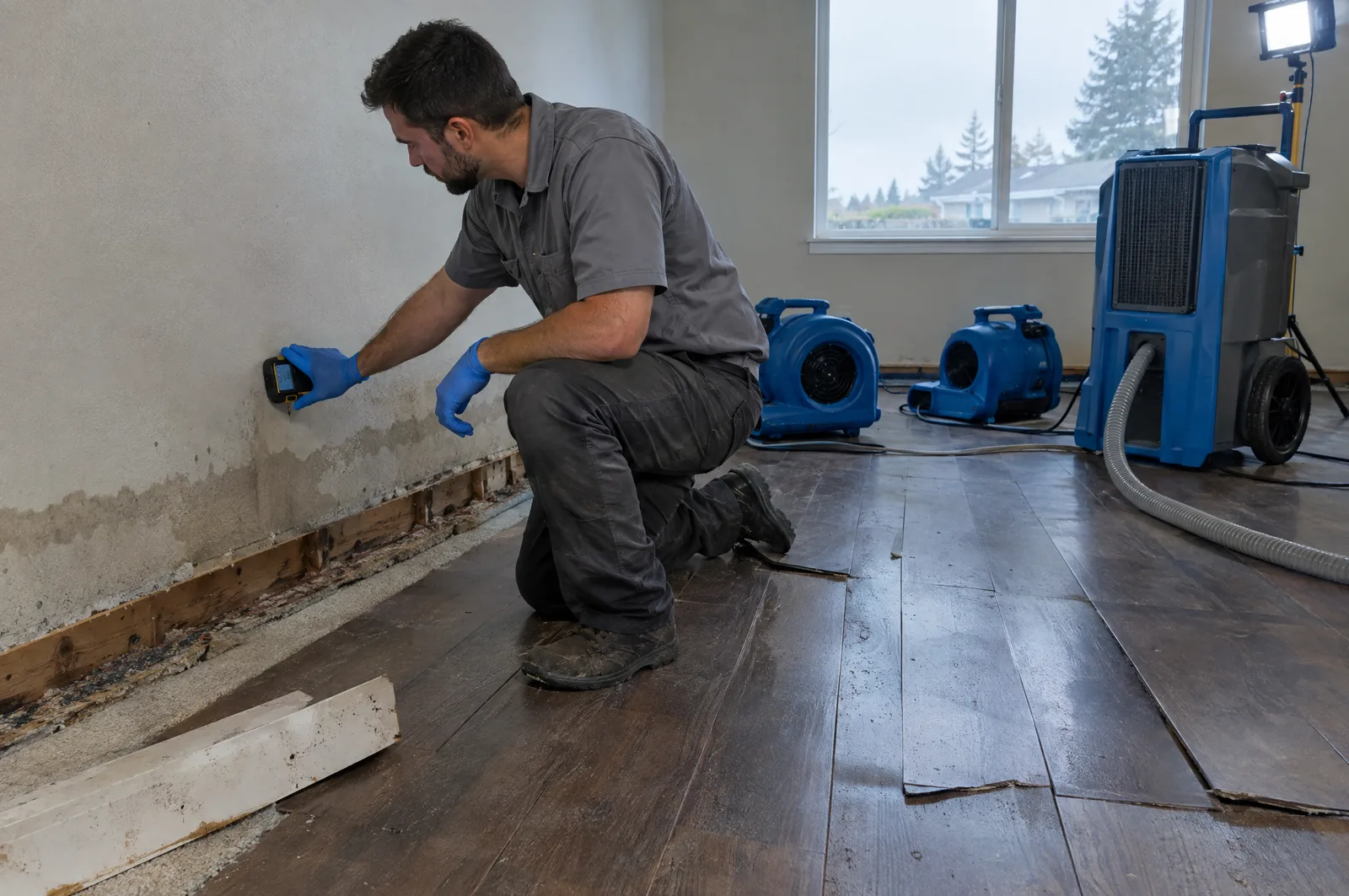
Suppression water is a full water loss. A working hose line moves a lot of water in a short time, and none of it stopped at the fire. It went into the subfloor, down inside the wall cavities, and into the crawlspace under the house. It behaves exactly like any other water loss, which in this climate means it will not dry on its own and it will grow mold if left. We put extraction and drying equipment in alongside the soot work rather than after it.
Smoke Goes Where The Fire Did Not
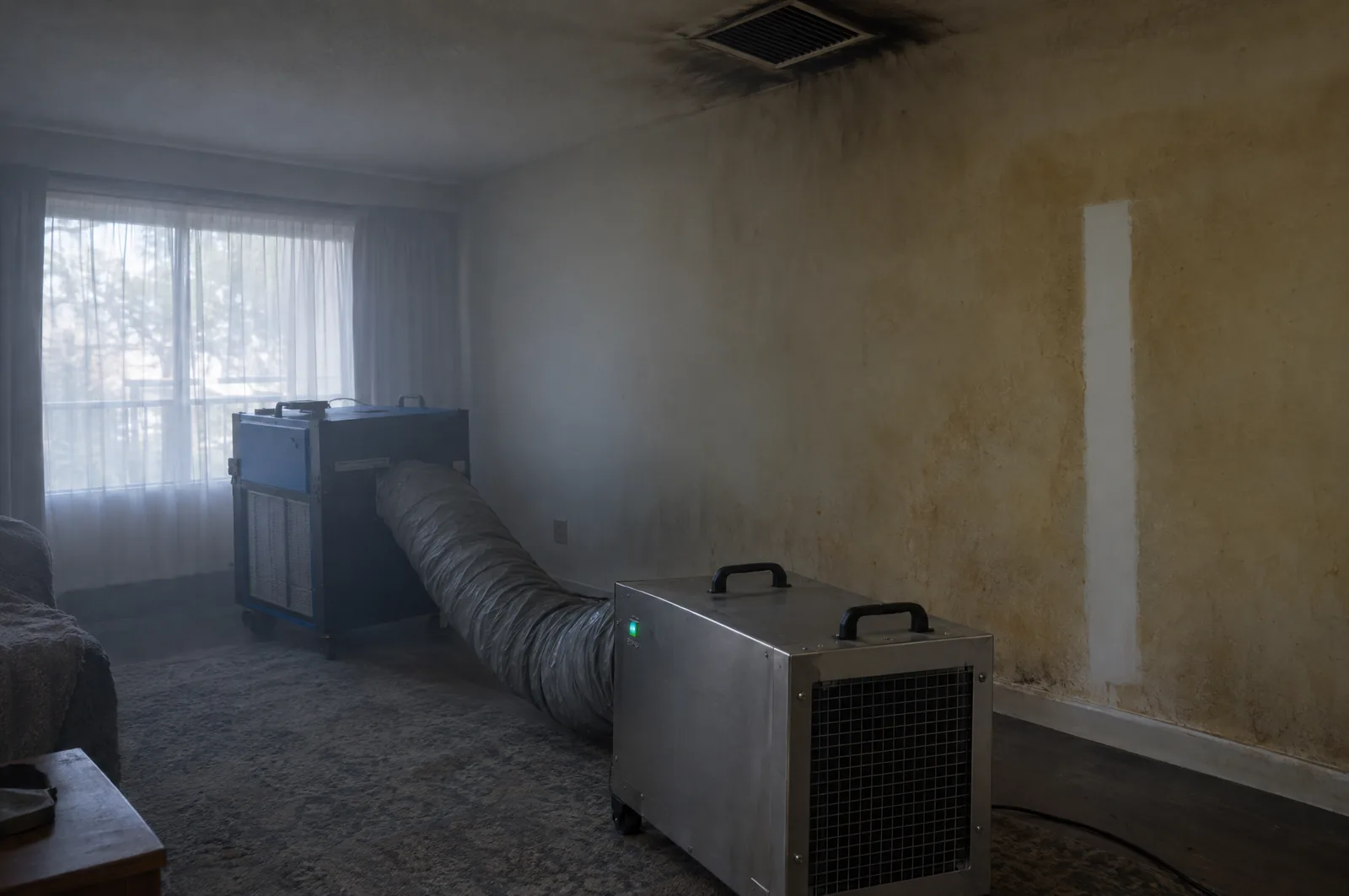
Smoke follows air pressure and the HVAC system. A contained fire in one room routinely deposits residue in bedrooms at the other end of the house and inside ductwork that will happily redistribute it every time the furnace runs. Scoping a fire loss by looking at where things are visibly burned understates it nearly every time, so we map the smoke travel and test residue on surfaces rather than assuming.
Residue type also decides the cleaning method. Dry smoke from a fast, hot, wood-fed fire behaves completely differently from wet smoke off a smoldering plastics fire, and both are different from the protein residue a kitchen fire leaves, which is almost invisible and bonds to everything. Using the wrong method on any of them drives the residue permanently into the surface. This is the most common way a well-meaning cleanup makes the final bill larger.
What It Costs
Fire losses price by the extent of structural damage, how far the smoke traveled, how much content is salvageable, and how much water went in to put it out. We inspect, scope, and put the number in writing before work starts. Fire is a covered peril on essentially every standard homeowners policy, and we document and coordinate the claim directly with your adjuster.
Get Help Now
Call as soon as the scene is released. 24/7 dispatch across Tumwater and Thurston County, same-day board-up, IICRC-certified technicians, and we handle the insurance.