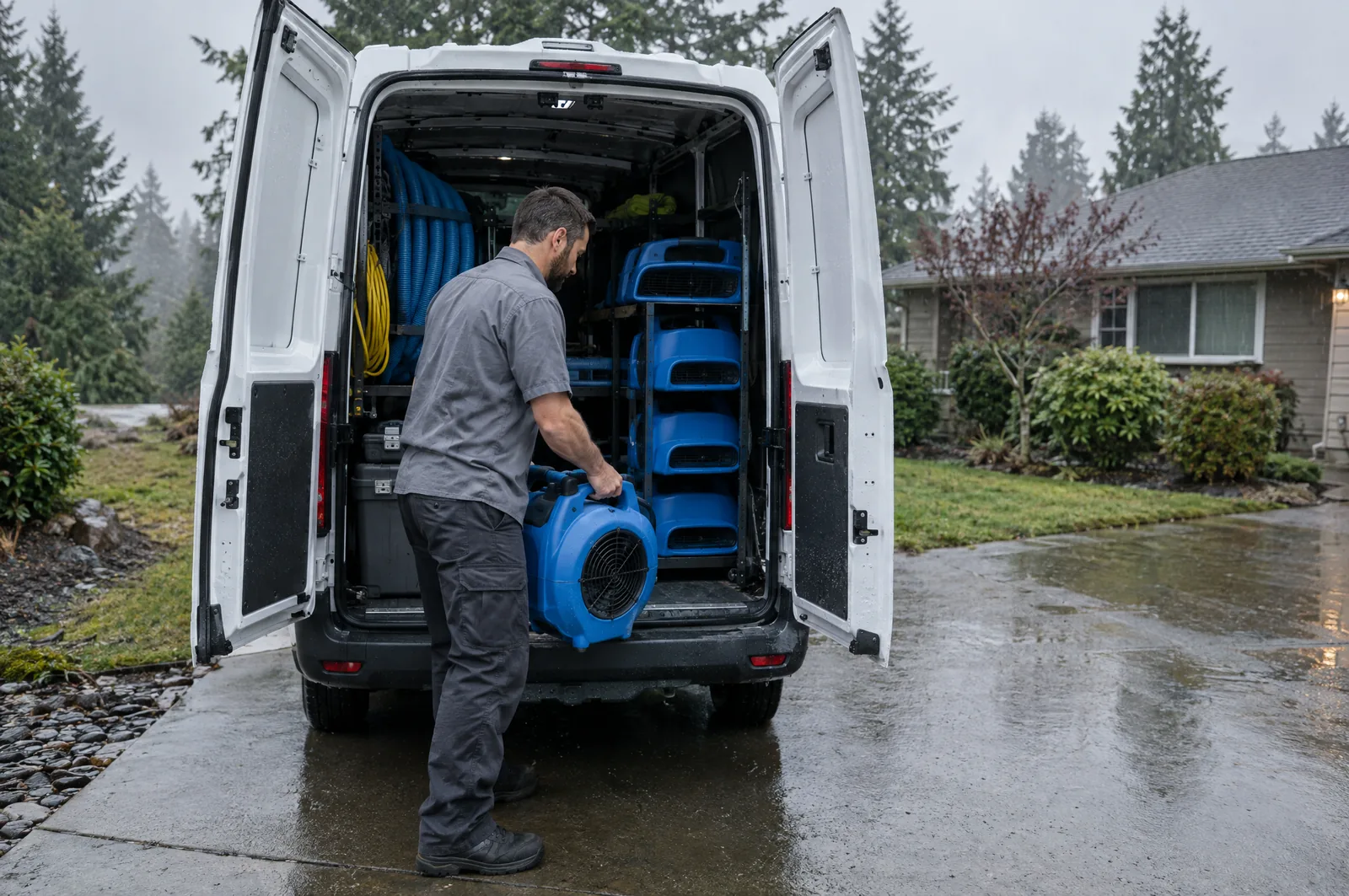
Nobody calls us on a good day. By the time someone dials a restoration company, something has already gone wrong: a supply line let go overnight, the fire department just cleared, a wall came open and there was black growth behind it. People are stressed, they are dealing with an insurance carrier for the first time in years, and they are being asked to make expensive decisions about a building they suddenly do not understand. Water & Fire Loss was built around that reality rather than around a sales script.
The documentation is part of the work. Most restoration companies dry a structure, email an invoice, and vanish. We treat the file as a deliverable: daily moisture logs, the psychrometric record, photo documentation, and a written scope of exactly what was removed and why. You get it whether or not you ever need it, because the one time you do need it, it is not something that can be recreated after the fact.
You should not have to take our word for it. In this industry the customer almost never has the expertise to verify the work. You cannot tell by looking whether the framing behind your new drywall was at 12 percent moisture or 25 percent when it got closed in. That information asymmetry is why the industry has the reputation it has, and it is the reason we hand you the moisture logs, photograph everything before it goes in the dumpster, and bring in a third party to clear remediation work rather than certifying our own.
We stay through the whole thing. A loss does not end when the water is out. We handle the emergency response, the extraction, the removal of what cannot be saved, the documented drying, and the restoration work that brings the property back to pre-loss condition. One company, one file, one point of accountability, rather than a mitigation contractor who disappears and a rebuild contractor who inherits a job nobody documented.
Thurston County breaks in specific ways. From roughly October through May the outdoor air here is near saturation, so nothing dries passively and the instinct to open the windows and air the place out works directly against you. The soil drains slowly and the seasonal water table comes up, which puts water under buildings every winter with no plumbing failure involved. And most homes in this county sit on a vented crawlspace, which means gravity delivers the majority of the water in any loss to a cool, dark, enclosed space that nobody inspects. Add hard freezes in December and January that split unprotected runs in crawlspaces and garage walls, and a heating season where wood stoves and furnace puff-backs are routine. We work all of it every day, so we know what we are walking into before we arrive.