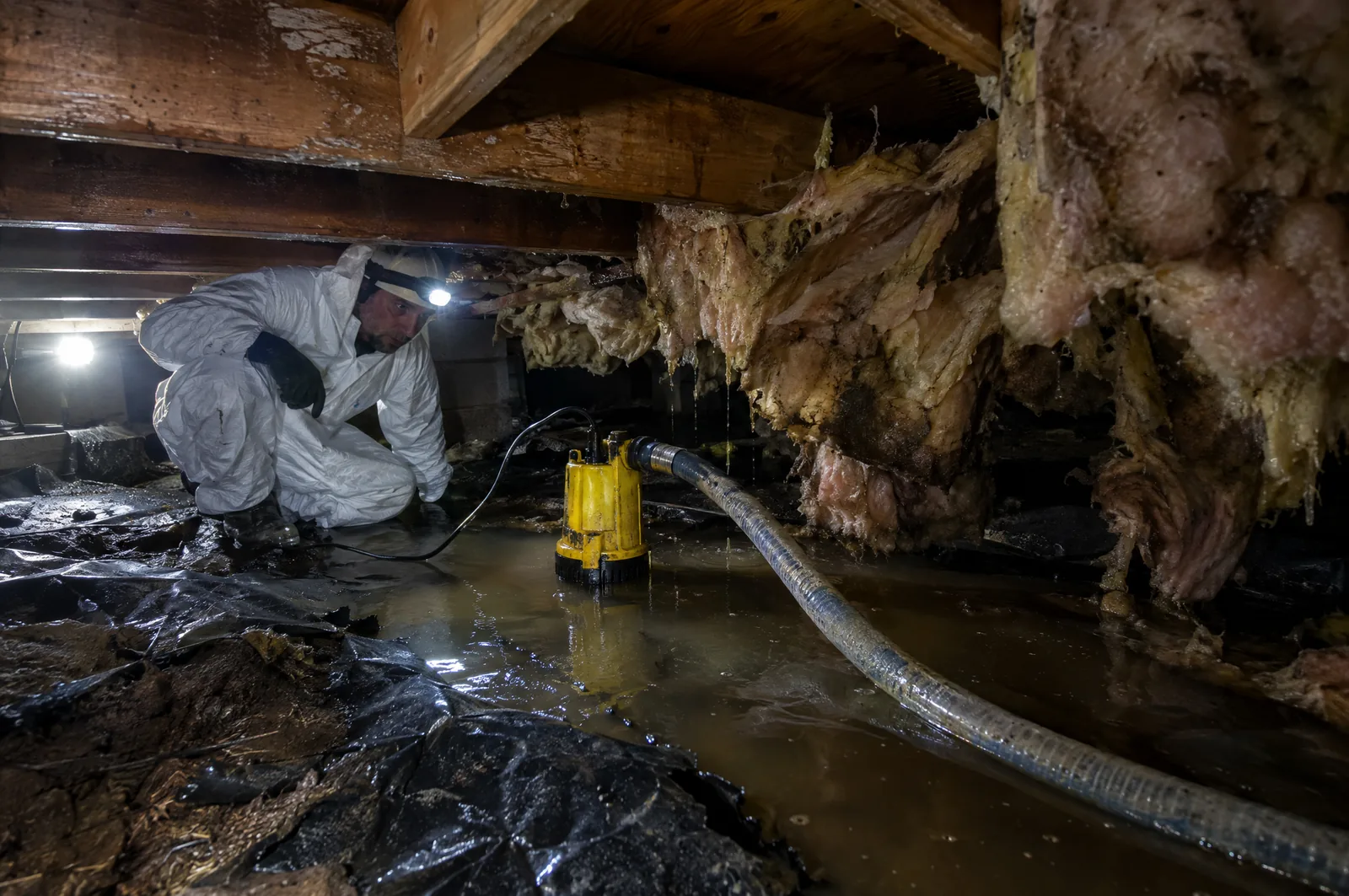
Submersible pump removing standing water from a flooded crawlspace with saturated insulation falling from the joist bays and a torn vapor barrier, under a Tumwater, WA home
The Thurston County Signature Loss

Crawlspace Water Removal In Tumwater, WA

Standing water under the floor, insulation hanging out of the joist bays, and a vapor barrier holding moisture against the soil. This is the most common water loss in Thurston County.

TRUSTED BY HOMES & BUSINESSES ACROSS THURSTON COUNTY

Overview

Crawlspace Flood Cleanup & Standing Water Removal

If you own a home in Tumwater, there is a good chance it sits on a vented crawlspace. That space is the lowest point in the building, and water is reliable about finding the lowest point.

Two Ways Water Gets Under Your House

From inside. A supply line lets go, a water heater fails, a toilet overflows, and the water goes through the floor assembly and lands underneath. People dry the room where it happened and never open the hatch.

From outside. Thurston County takes a lot of rain between October and May, onto soil that does not drain quickly, with a seasonal water table that comes up. Add a downspout discharging next to the foundation, a grade that slopes back toward the house, or a footing drain that stopped working years ago, and water arrives under the building every winter without any plumbing failure at all.

Why It Matters More Than It Looks

A crawlspace is cool, dark, enclosed, and has effectively no airflow. Put standing water and wet organic material in it and you have close to ideal conditions for mold, along with conditions for rot in the joists, the rim board, and the posts. Meanwhile the air in that space does not stay in that space. Air moves upward through floor penetrations into the living area, carrying humidity and whatever is growing down there with it.

The other cost is quieter. Saturated batt insulation loses its R-value permanently, so your floors are cold and your heating bill goes up, and most people never connect that to the crawlspace.

Get Help Now

Water under the house, or a musty smell you cannot place? Call us. We will go all the way under, photograph what is actually down there, and tell you what is causing it.

Scope of Work

What Our Crawlspace Water Removal Service Includes

Standing Water Pumped Out Properly

Submersible pumping to remove pooled water, then extraction of what is held in the vapor barrier and soil surface. Water under a Thurston County house does not drain away on its own, because the soil it is sitting on is already saturated.

Saturated Insulation Removed, Not Left To Dry

Wet fiberglass batt is finished. It loses R-value permanently, it holds water against the subfloor, and it is an ideal mold substrate. It comes out and goes in a bag rather than being left in place to dry, which is what we find on most homes where someone already tried to handle this.

Vapor Barrier Assessed And Replaced

A torn, displaced, or incorrectly lapped vapor barrier stops being a moisture control and starts being a tray that holds water against your framing. We inspect the whole barrier, not the part near the hatch, and replace what has failed.

Underfloor Space Dried To A Documented Standard

Dehumidification and air movement placed in the crawl itself, with moisture readings on the joists, the subfloor, and the rim board until the numbers hit dry standard. Not a look and a guess from the hatch opening.

We Tell You Why It Happened

Pumping out a crawl that fills every winter is a service you will need again next winter. We document what we find, whether it points to gutter and downspout discharge, grading, a failed footing drain, a plumbing failure, or seasonal groundwater, so the actual cause can be addressed.

How It Works

Our Crawlspace Water Removal Process, Step By Step

  1. Step 1

    Inspection And Moisture Readings

    Someone goes all the way under the house, not just a look from the hatch. We map where the water is standing, take moisture readings on joists, subfloor, rim board, and posts, measure the humidity in the space, check the condition and coverage of the vapor barrier, and look for the entry point. Everything gets photographed, because this is a space you are never going to inspect yourself and the photos are how you actually see what you are paying for.

  2. Step 2

    Water Removal

    Submersible pumps take out pooled water, then we extract what is held on the surface of the vapor barrier and in the top layer of soil. Where the barrier has trapped water underneath it, it gets opened so the water can be reached rather than pumping the top and leaving a sealed pool below.

  3. Step 3

    Removing What Is Ruined

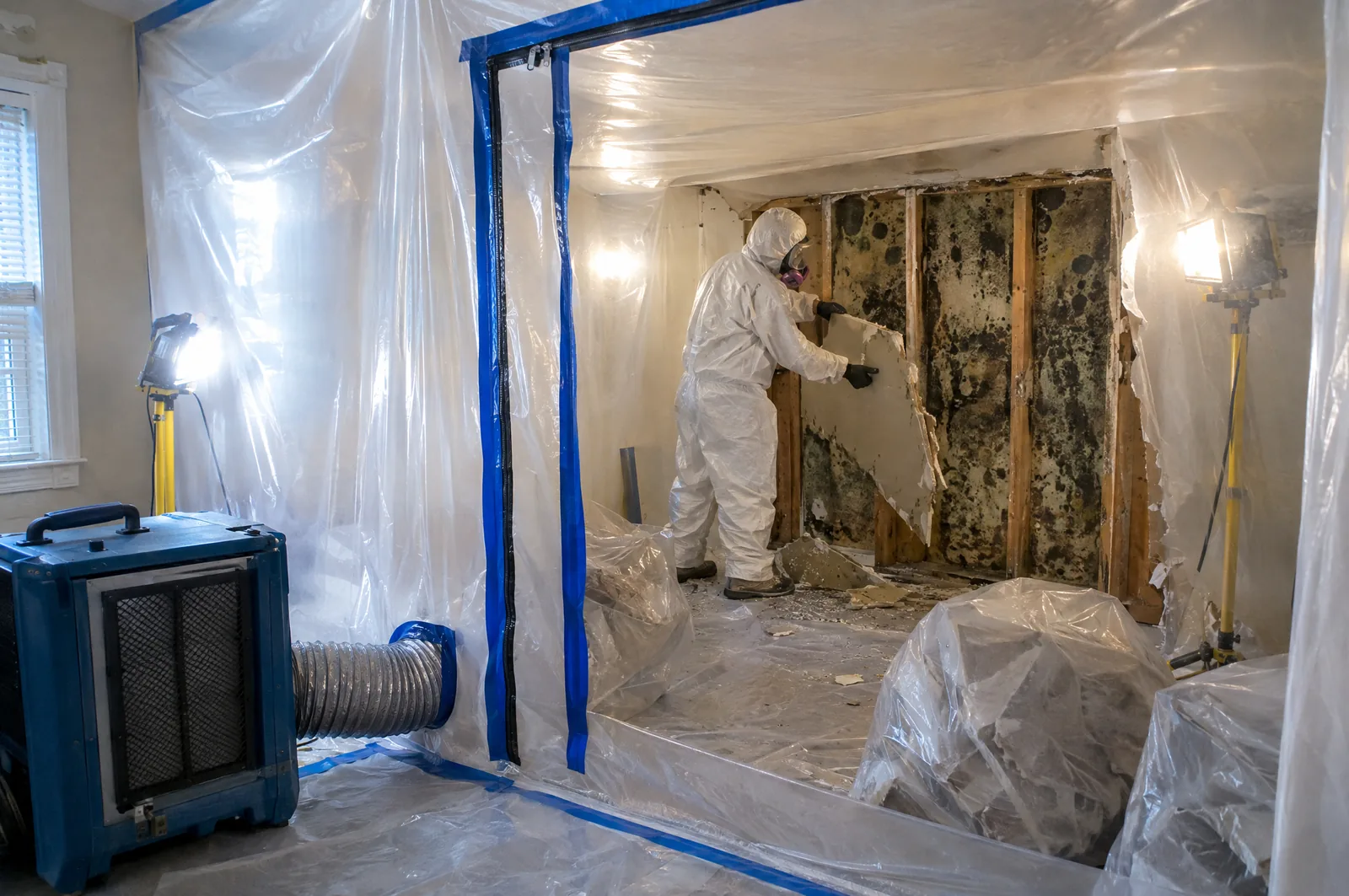
    Saturated batt insulation comes out and goes in bags. It has lost its R-value permanently, it is heavy with water sitting directly against your subfloor, and it is the best mold substrate in the building. Failed sections of vapor barrier come out with it. On losses with contaminated water or existing mold growth, this happens under containment with negative air so spores are not pushed up into the living space through floor penetrations.

  4. Step 4

    Treatment And Drying

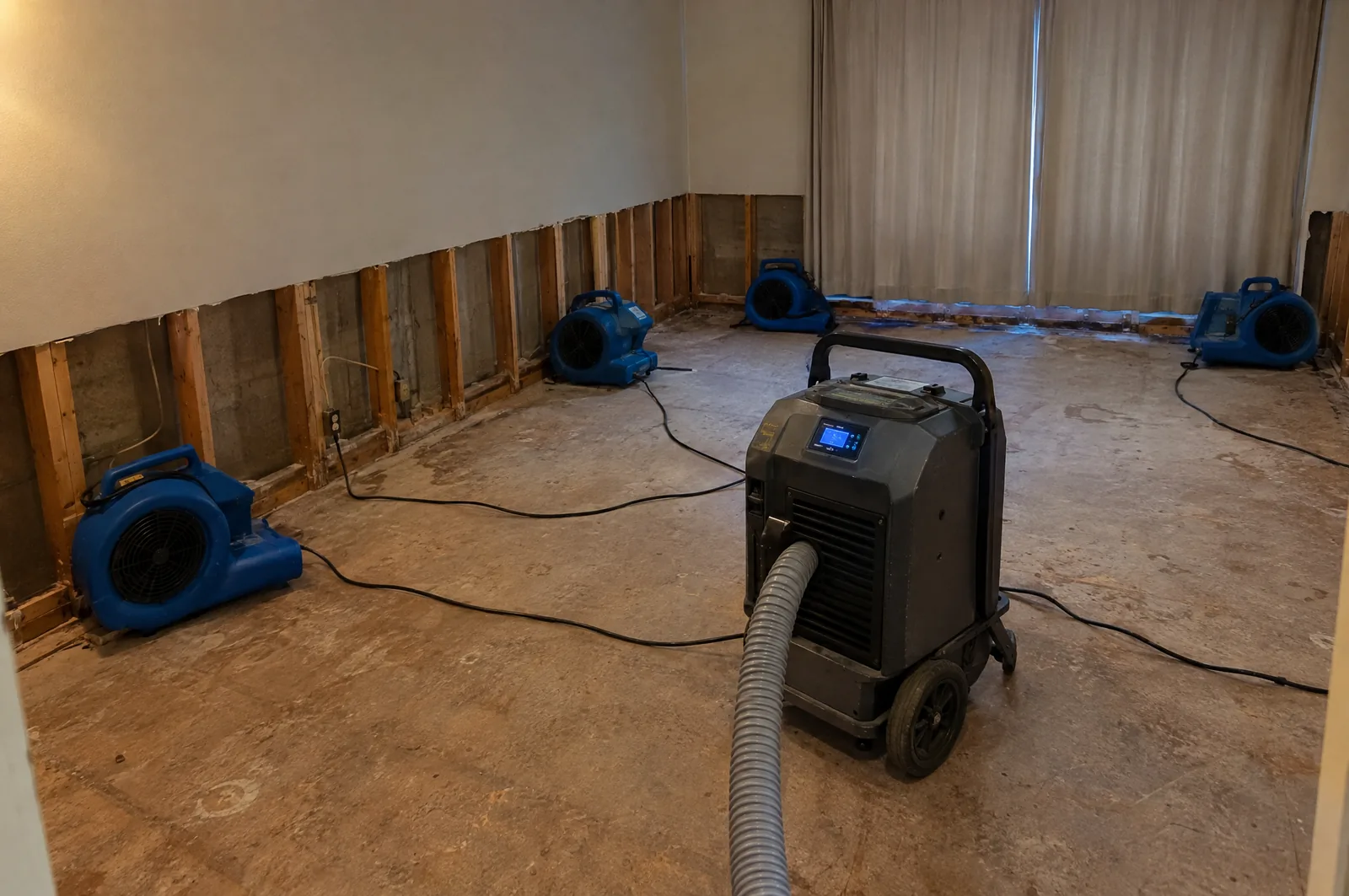
    Affected framing gets an antimicrobial application, then dehumidification and air movement go into the crawlspace itself and run until the wood hits dry standard. Crawlspaces dry slowly because they are cool, enclosed, and sitting on wet ground, so this typically takes longer than drying a room upstairs. We take readings daily rather than assuming a duration.

  5. Step 5

    Rebuild And Findings

    New vapor barrier goes in, correctly lapped and run up the stem walls, and insulation is replaced once the framing is verified dry, in that order, because insulating a wet crawl seals the problem in. You receive the photo record, the moisture logs, and a written statement of what we found and what appears to be causing it, so if the source is a downspout discharging at the foundation or a grade issue, you can fix the cause instead of paying us again next February.

24/7 Emergency Response

Ready For Crawlspace Water Removal?

Call now for 24/7 emergency response across Thurston County. IICRC-certified technicians, insurance handled.

FAQs

Crawlspace Water Removal Questions From Tumwater Homeowners

  • You need to deal with it. Drying the room above standing water is the most common half-measure we get called back on, usually six to twelve months later about a musty smell. The subfloor is being wetted continuously from underneath, so it never actually reaches dry standard no matter what the surface reads, and the damp organic material down there grows mold in a cool dark enclosed space with no airflow. This is the single most frequent reason a water loss in this county turns into a mold job.

  • It is common, but common is not the same as acceptable, and it will not stay a neutral fact about your house. Persistent standing water under a home leads to rot in the joists and rim board, permanently failed insulation, mold growth, and elevated humidity in the living space above. It usually traces to something fixable: downspouts discharging at the foundation, grade sloping toward the house, a failed or absent footing drain, or a vapor barrier installed so it traps water rather than excluding it. We document what we find so the cause can be addressed.

  • The usual signals are a musty smell that is worst near the floor or in a closet, floors that feel cold or slightly soft, higher than normal indoor humidity, condensation on the inside of windows, or insulation visibly hanging down when you shine a light through the hatch. Rising heating bills are another one, since wet insulation stops working. If you suspect it, we will come look and tell you what is actually happening.

  • It depends entirely on the source. Water from a sudden plumbing failure inside the home that ran down into the crawlspace is generally covered. Groundwater, surface water intrusion, and long-term seepage are usually excluded on a standard homeowners policy, and that is a common and unwelcome surprise. We document the source carefully either way, because that documentation is what determines the answer, and we tell you honestly what we think the carrier will say.

  • No. Wet fiberglass batt does not recover. It compresses, loses its R-value permanently, holds water against the subfloor, and provides a mold substrate. Anyone leaving saturated batt in place to dry is saving an hour of labor and handing you a mold problem. It comes out, the framing gets dried and verified, and new insulation goes in after.

24/7 Emergency Restoration

Don't Wait. Call Now.

Open 24/7 - Emergency Dispatch

Tap To Call (877) 524-6411